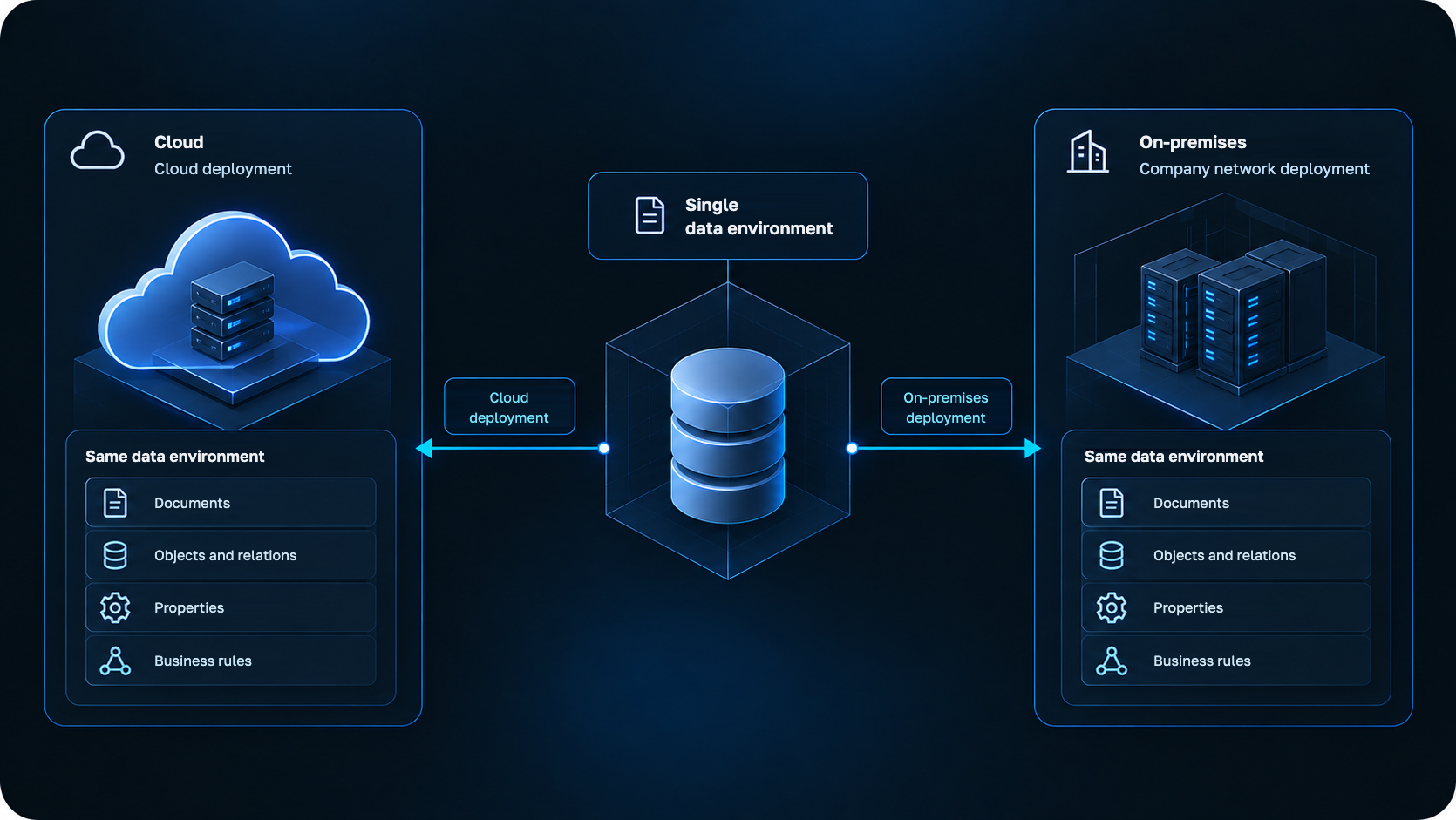
Constructum cloud PLM platform, the Engineering Domain Model (K-Model) for engineering data, and Limpopo Guardian Engine for context-based data access. All three are built on our own domain model, which represents the real objects, relationships and processes of engineering work. Constructum helps engineers work correctly: it prevents errors while the work is being done, not only detects them afterwards.
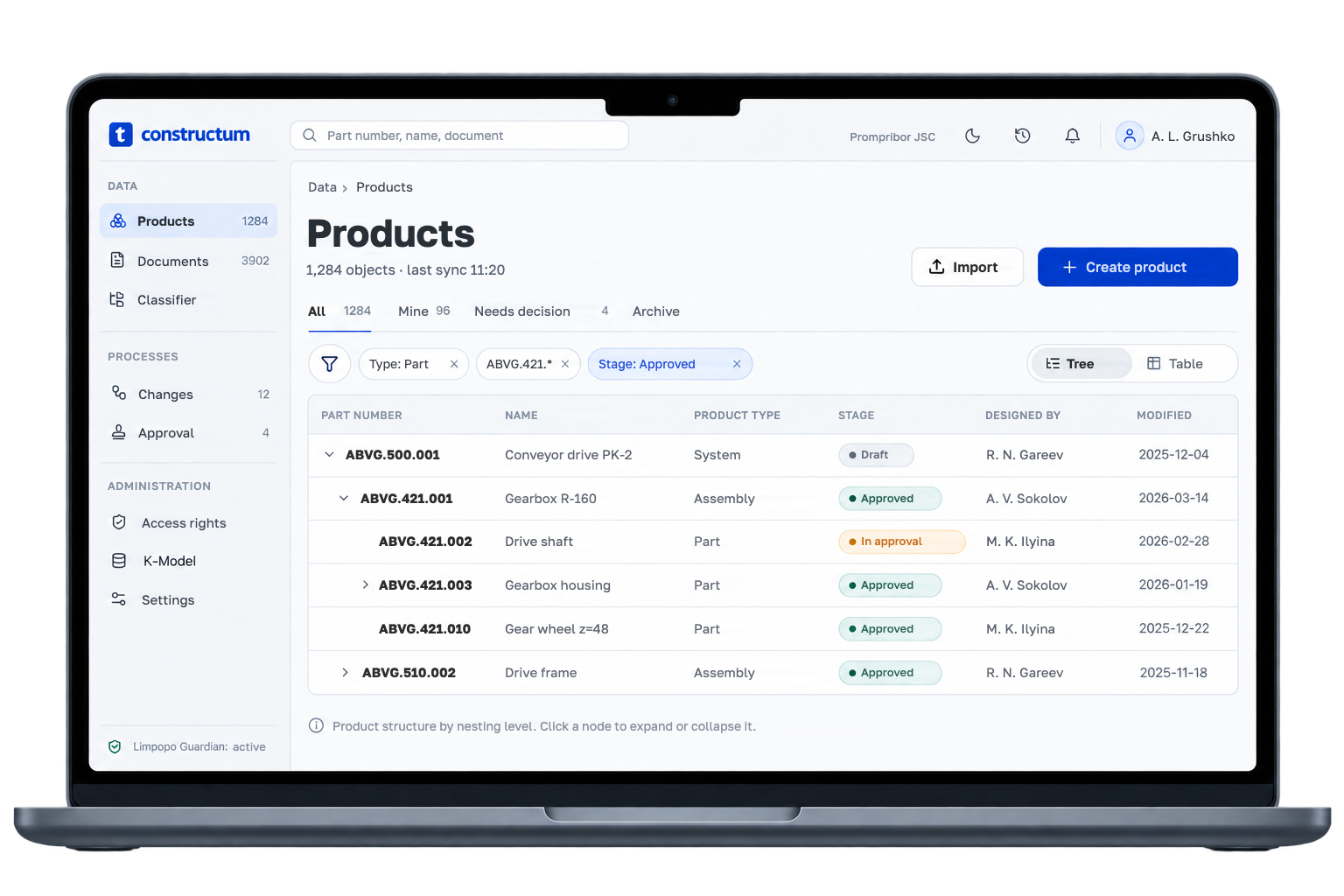
Demo data
Taryon is a Russian developer of engineering software. Our expertise comes from hands-on design engineering, from working with ESKD — the Russian national system of design documentation standards (GOST 2.xxx) — and with international configuration management standards such as ANSI/EIA-649, ISO 10007 and MIL-HDBK-61, and from projects implementing and integrating Western PLM systems at manufacturing companies.
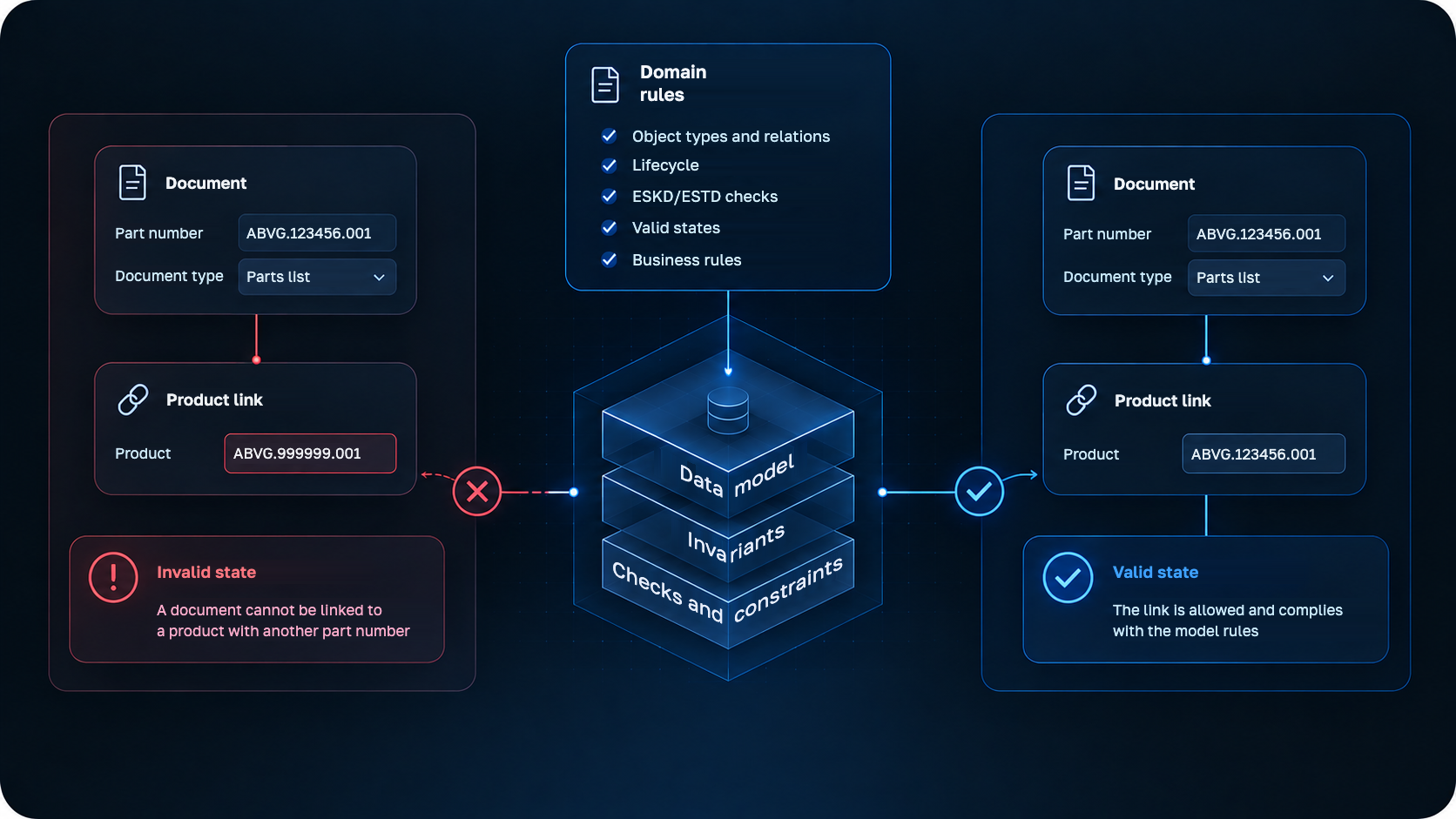
These projects showed that the problem goes deeper than configuring the user interface, report forms, document templates and attributes to match the standards. Configuration removes only part of the mismatch. PLM systems are built on different domain models: on different assumptions about which objects exist and which relationships between them are allowed. In ESKD practice, the product, its documentation, its variants and its changes are separate concepts linked by defined rules and processes. Taryon builds these concepts directly into the data model instead of reproducing them on top of a different underlying model.
The data model, the platform and access control are developed together and work as a single system.
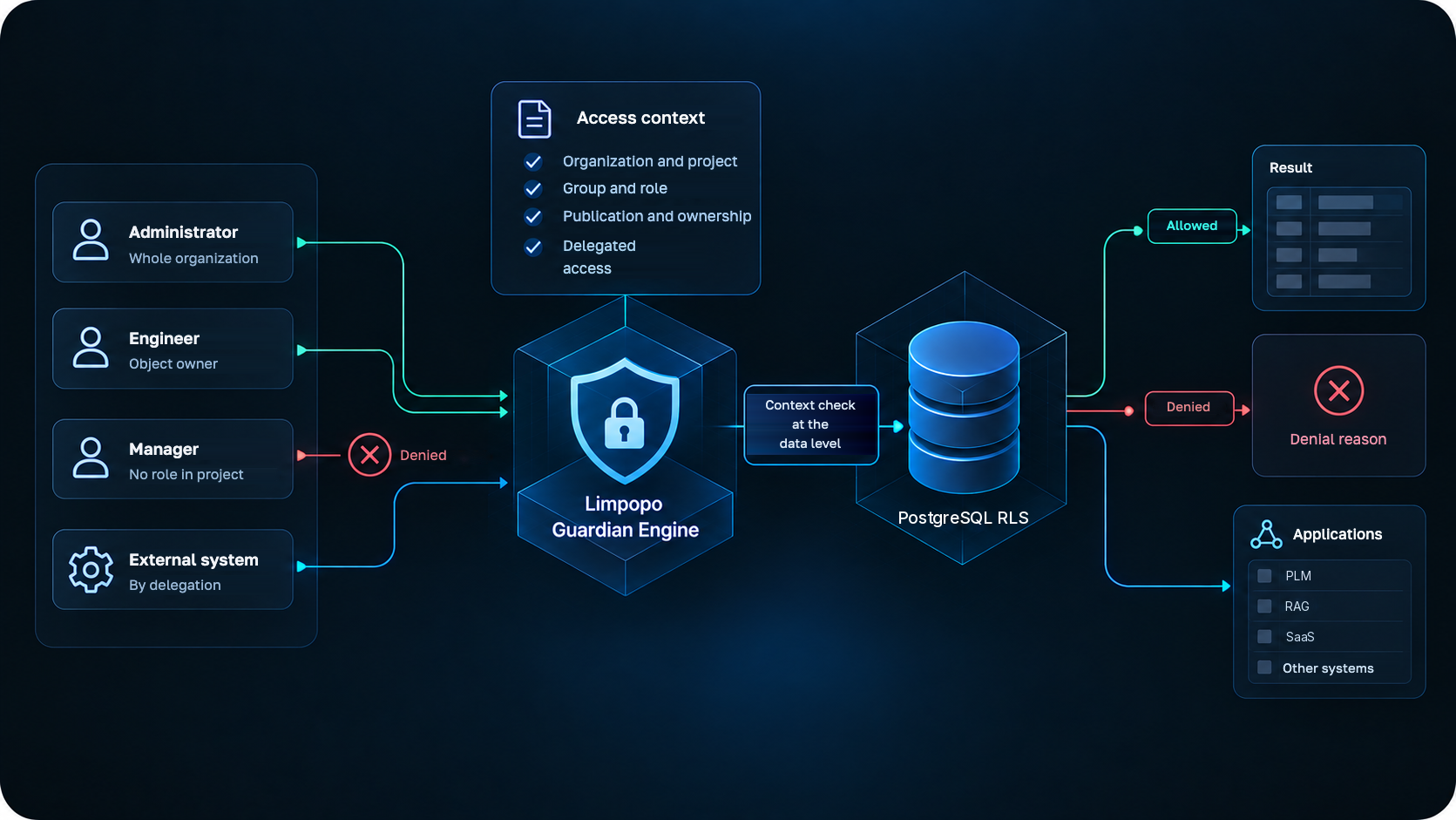
A universal context-aware security layer: access is determined by the relationships between the user, the object and the context of the request. Rules are enforced at the data level and are the same for every application.
Open product pageProducts, assemblies, parts and documents are described the way design offices work with them: part number, name, stage letter, revision, change notice. Parts lists are generated with no manual cleanup.
Open product pageOne environment for products, documents, revisions and approvals, built for small and mid-sized manufacturers. Runs in the cloud or on-premises.
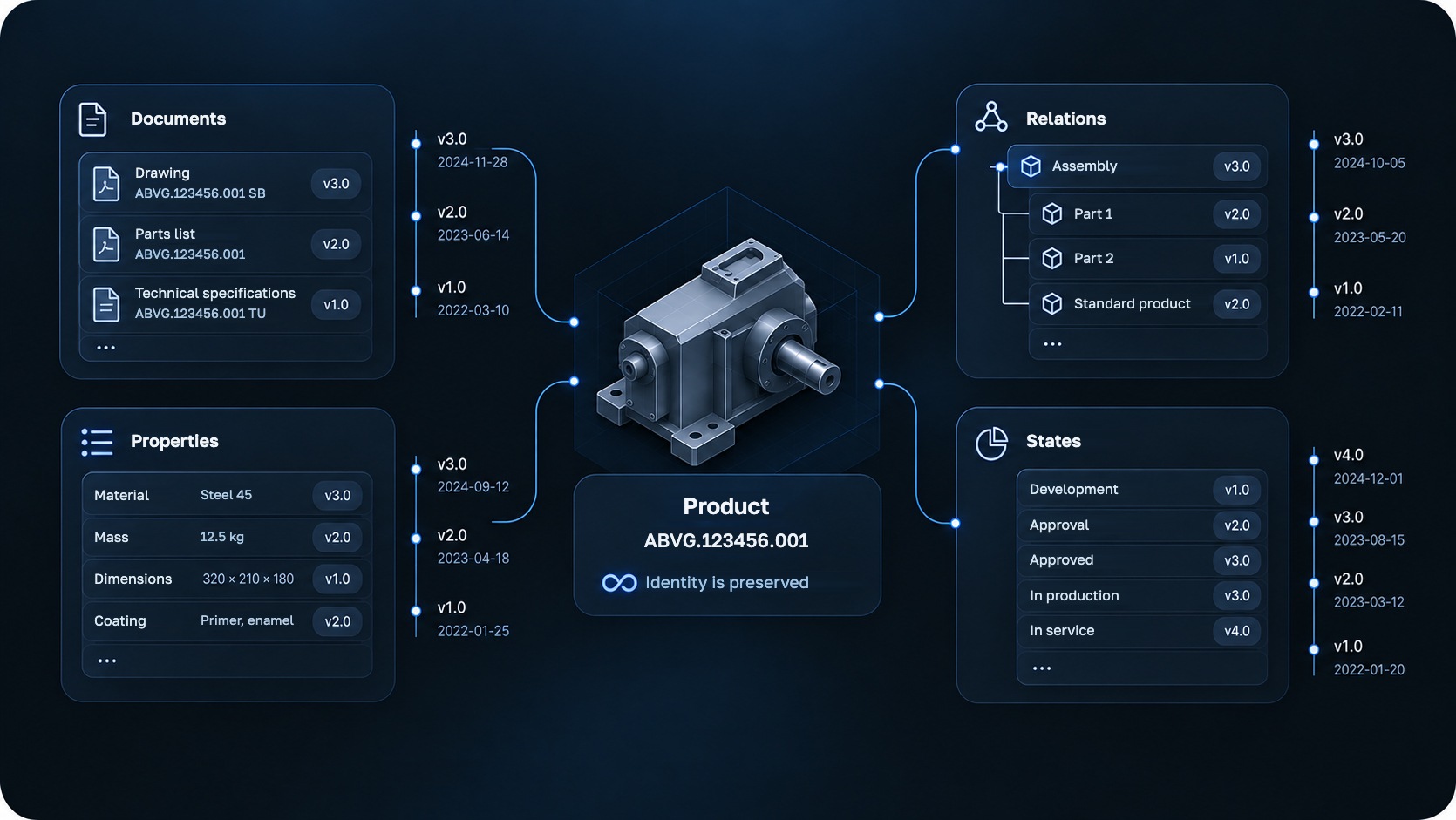
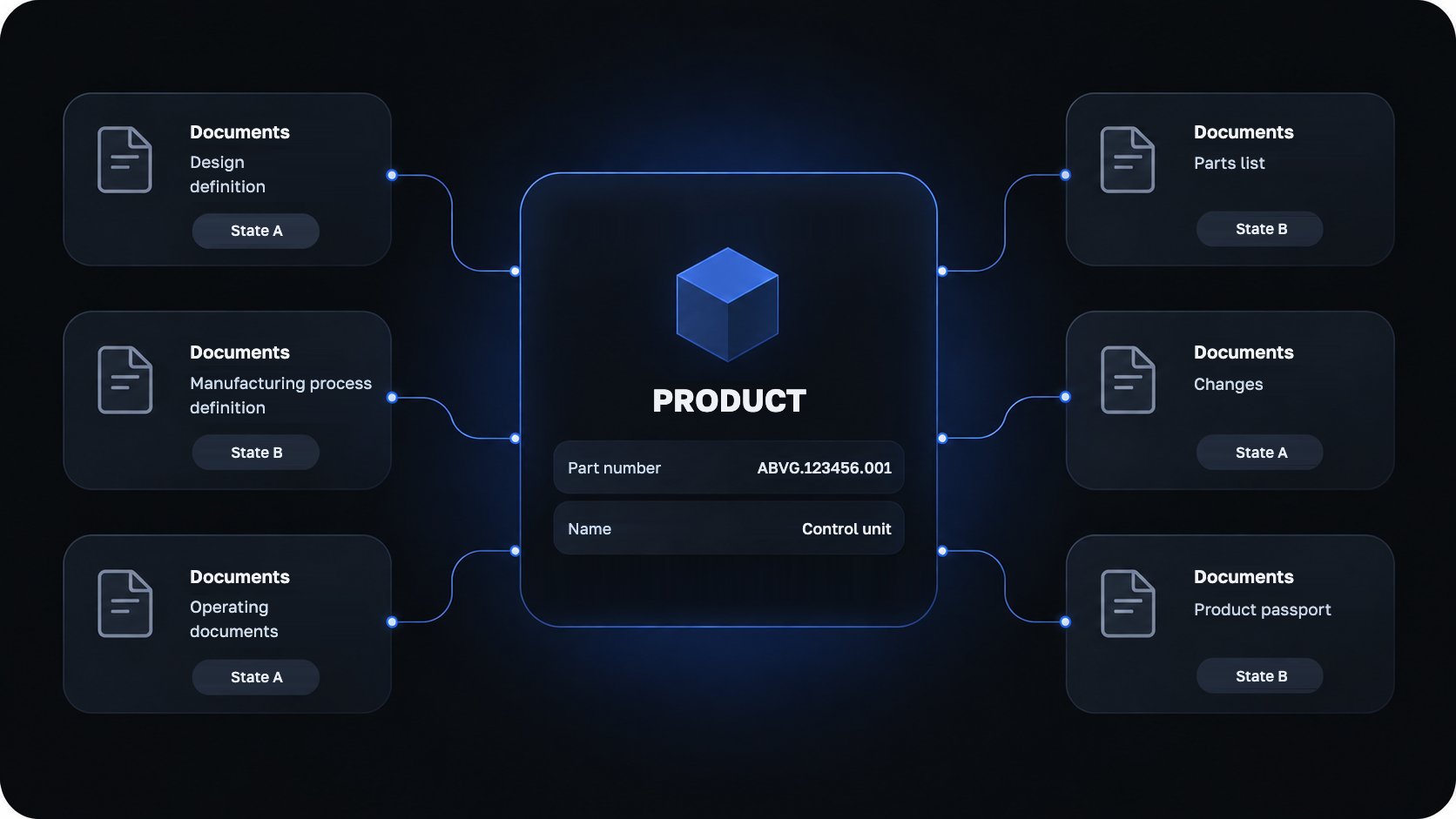
Go to sectionIn conventional PLM systems, an item's identity is tied to the revision of its document set: the product exists only as far as the documentation describes it. In Constructum, the product is a model object in its own right, and documents, revisions and change notices are linked to it as descriptions of its state — the same separation of product and product definition that ISO 10303-239 makes.
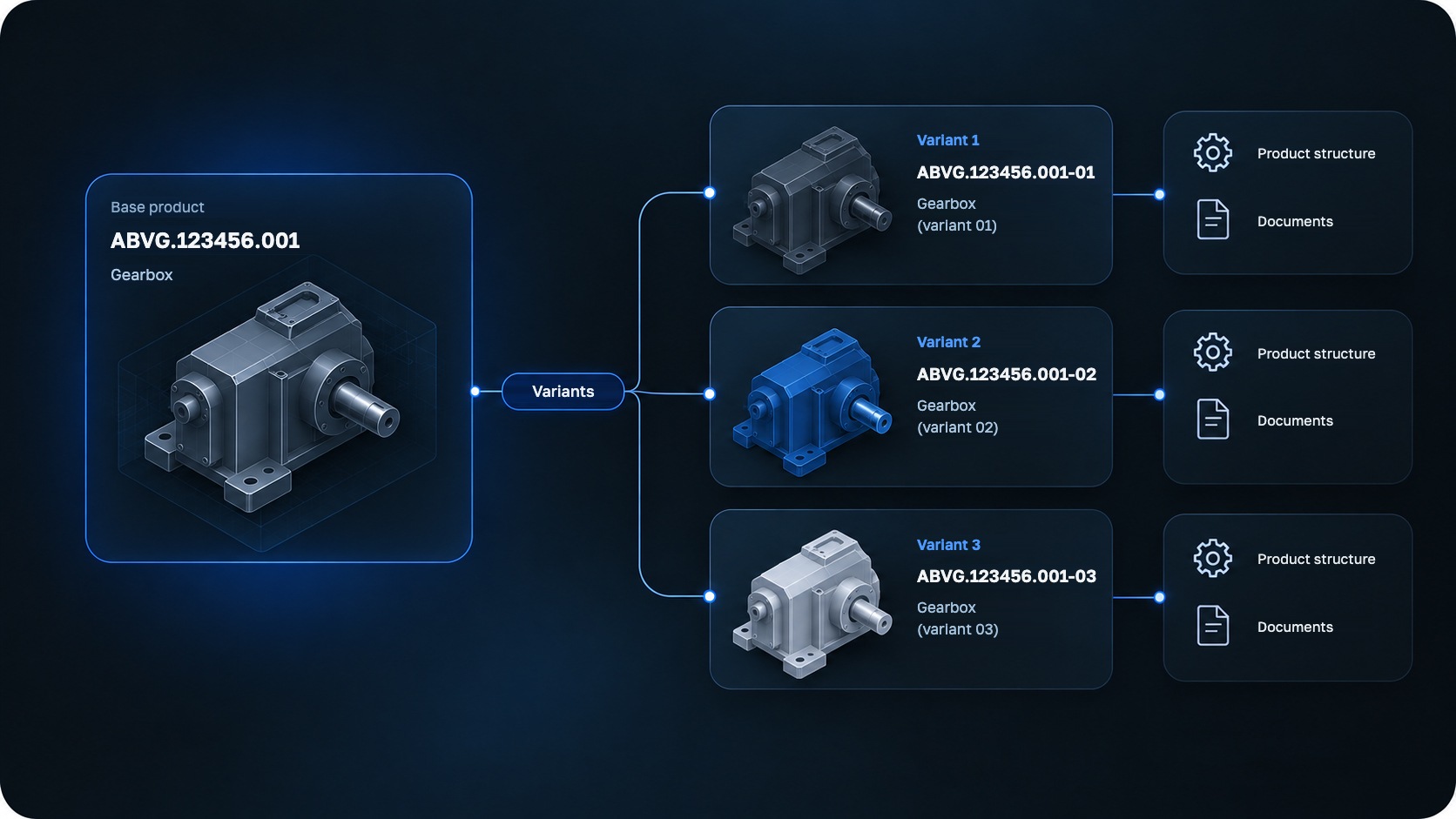
A variant in the ESKD sense (GOST 2.113) is also a separate product with its own part number and effectivity, not a configuration option inside an item record.
The part number and name belong to the product, not to a set of files. The development-stage letter is assigned to the documentation.
Each variant has its own part number, product structure and effectivity, and can be used, manufactured and tracked on its own.
A revision is released with a change notice that lists every affected document.
Why Western PLM systems cannot simply be configured to meet ESKD requirements, and which architectural principles follow from this for Constructum.
Read on HabrThe methodology behind our products: from describing a product as an object to an enterprise engineering data system. Grounded in ESKD, ANSI/EIA-649, ISO 10007 and ISO 10303-239.
Open the bookAccess control architecture: from the object and its relationships to context, rules and the effective permission enforced on the data.
Open the bookShort posts on the data model, engineering documentation standards and platform development. New posts follow each release.
Open the channelConsulting on data model setup in a PLM system you already run or are implementing. Tell us which system you use and what needs to be reviewed.
Tell us about your task — we will review it and suggest the next step